

Packaging Trends Are Reshaping Food Manufacturing. Is Your Sanitation Program Keeping Up?
Packaging is often viewed as the final step before a product leaves the facility. But for food and beverage manufacturers, it is much more than an end-of-line function. It plays a critical role in ensuring products are protected, meet expectations, and move efficiently through the final stages of production.
As packaging lines become faster and more automated, sanitation programs need to evolve with them. A packaging line that supports more SKUs, shorter runs, and faster changeovers can only perform as intended if the cleaning and sanitation process behind it is built for the same pace of production.
For manufacturers, the question is not just, “How do we package products more efficiently?” It is also, “How do we keep the other elements of our production up to par equipment without slowing production down?”
Here are five packaging trends influencing modern manufacturing, and what they mean for sanitation and cleaning equipment.
1. Food Safety Is Extending Further Into the Packaging Environment
Food safety does not stop at processing. Fillers, conveyors, transfer equipment, packaging interfaces, scales, trays, totes, nozzles, and other line components can all affect product quality and contamination risk.
As manufacturers face higher expectations, packaging areas are being treated as a more active part of the food safety system. This is especially important in facilities handling allergens, high-moisture products, ready-to-eat foods, dairy, meat, poultry, sauces, beverages, nutraceuticals, and other sensitive products.
For sanitation teams, this means cleaning programs need to account for more than the primary processing equipment. Removable parts, filler components, product contact surfaces, bins, racks, molds, and other tools used around the packaging line need to be cleaned thoroughly and consistently.

Automated Clean-Out-of-Place and Clean-In-Place systems can help manufacturers reduce the variability that comes with manual cleaning. Instead of relying on different operators to clean the same part the same way every time, automated systems support repeatable cleaning as well as documentation of these processes.
2. Automation is Becoming a Labor Strategy, Not Just a Production Strategy
Labor shortages continue to affect food and beverage manufacturing. Repetitive, physically demanding tasks can be difficult to staff, and turnover can make it harder to maintain consistent practices.
Packaging automation is one response to that challenge. But automation should not stop there. Cleaning and sanitation are also labor-intensive areas where manufacturers can reduce manual work.
Manual cleaning often requires employees to lift, scrub, rinse, inspect, and reassemble equipment under time pressure.
Automated COP systems and CIP systems help shift sanitation from a manual process to a controlled process. That can free employees to focus on higher-value tasks such as inspection, preventive maintenance, and continuous improvement.
For facilities that are already investing in production automation, sanitation automation is a logical next step. A highly automated packaging line can still be limited by a manual cleaning process that depends too heavily on labor availability.
3. SKU Growth and Faster Changeovers are Increasingly Cleaning Complexity
Retail demands, private label growth, e-commerce formats, limited-time products, and consumer interest in variety have all contributed to more SKUs and more frequent changeovers.
For manufacturers, this creates a practical challenge: every new flavor, formula, package size, allergen profile, or product format can introduce additional cleaning requirements. A line may need to move from one product to another quickly while still protecting quality, preventing cross-contact, and meeting sanitation standards.
That is especially relevant for facilities producing sauces, dressings, dairy products, beverages, prepared foods, snack foods, bakery items, nutraceuticals, cosmetics, and personal care products. Many of these environments involve sticky residues, powders, oils, proteins, colorants, fragrances, or other soils that require a carefully engineered cleaning approach.
Effective sanitation in a high-changeover environment depends on process design. Systems must be able to clean the parts, tools, containers, and components that support frequent product transitions.
4. Sustainability Goals are Pushing Manufacturers to Reduce Waste Across the Entire Operation
Packaging sustainability is often discussed in terms of materials: recyclable packaging, lightweighting, recycled content, compostable formats, and reduced plastic use. Those initiatives matter and sustainability also depends on what happens inside the plant.
Inefficient cleaning processes can waste water, energy, labor, and production time that can all undermine sustainability goals.
A well-designed sanitation system can support sustainability by helping manufacturers optimize cleaning cycles. Properly selected spray devices, sanitary strainers, hygienic components, and digital monitoring tools can all contribute to a more efficient sanitation program.
For manufacturers evaluating new packaging materials or formats, sanitation should be part of the conversation early.
Sustainability is strongest when packaging, processing, and sanitation teams work together. A packaging change should not create cleaning inefficiencies that increase water use, chemical use, labor, or downtime elsewhere in the facility.
5. Data is Becoming Essential for Sanitation Visibility and Continuous Improvement
Modern packaging lines generate more data than ever. Manufacturers are tracking uptime, downtime, throughput, rejects, quality checks, and maintenance needs. Sanitation programs are moving in the same direction.
Digital records can help teams better understand what happened during a cleaning cycle, whether the process met defined parameters, and where improvements may be needed.
Digital process recording and cloud-based monitoring can support more consistent documentation than paper records alone. Instead of relying only on handwritten logs, manufacturers can capture cleaning data and use it to evaluate trends, support audits, identify recurring issues, and improve accountability.
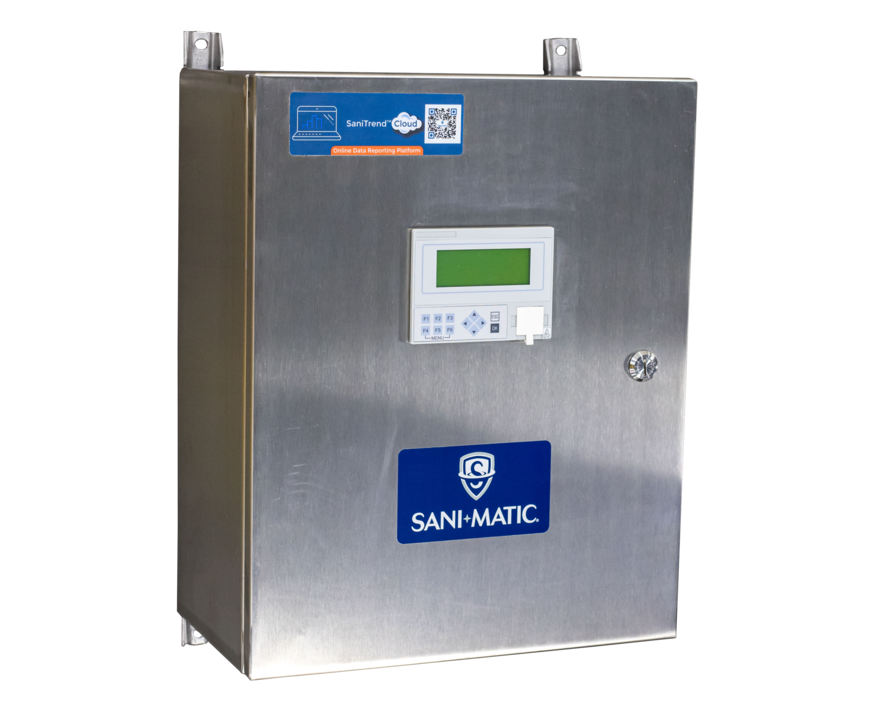
As packaging operations become more connected, sanitation data should not remain separate from the rest of the operation. Cleaning performance directly affects manufacturing efficiency.
What These Trends Mean for Food and Beverage Manufacturers
Packaging trends are not isolated from the rest of the plant.
Manufacturers that want to keep packaging lines running efficiently need cleaning systems that are designed for modern production. That includes:
- Clean-In-Place systems for process lines, tanks, piping, fillers, and other equipment
- Clean-Out-of-Place systems for removable parts, fittings, hoses, utensils, and components
- Hygienic components such as strainers, spray devices, and tank components
- Field services and preventive maintenance to keep systems operating as intended
- Digital reporting tools that improve visibility into cleaning performance
Sani-Matic works with manufacturers across food and beverage markets to design sanitation solutions that support safe, efficient, and repeatable cleaning.
Build a Sanitation Program that Supports Modern Packaging Demands
Whether your facility is adding automation, expanding SKU variety, reducing manual cleaning, improving documentation, or preparing for new packaging requirements, Sani-Matic can help evaluate your cleaning process and identify the right sanitation solution for your operation.
Contact us to learn more about how we can help!